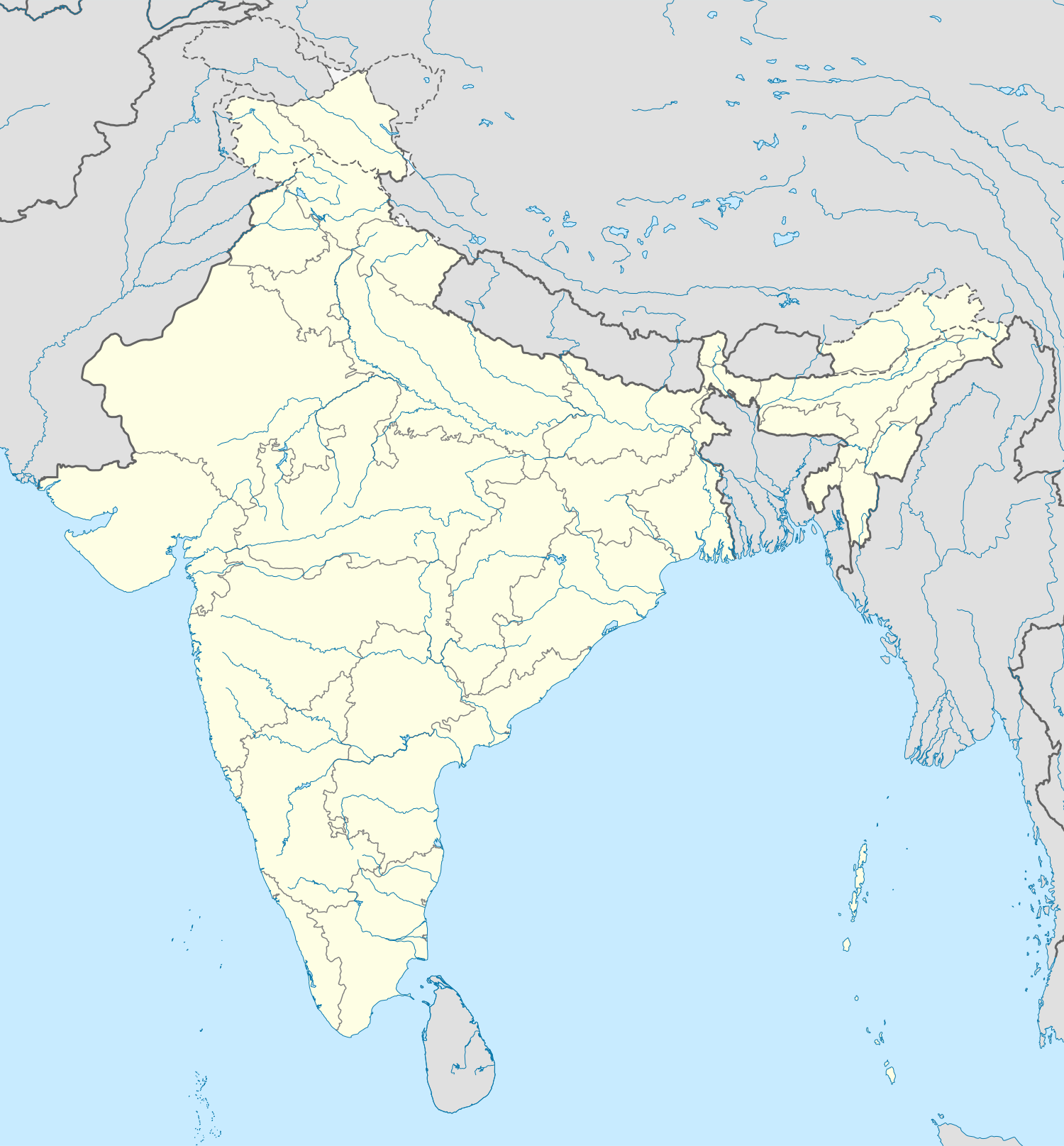
Kolkata, West Bengal
Rasgulla & Rasmalai

Howrah Bridge
Grew from villages the British East India Company acquired in the 1690s into the capital of British India until 1911, and remains Bengal's cultural capital, home to Tagore and Ray.
- Victoria Memorial
- Howrah Bridge
- Park Street
- Dakshineswar Kali Temple
Backdrop pattern: Bengali alpona floor art

Jaipur, Rajasthan
Ghevar
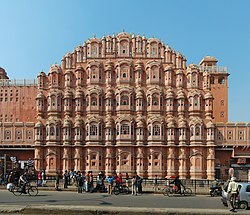
Hawa Mahal
Founded in 1727 by Maharaja Sawai Jai Singh II as one of India's first planned cities, laid out on Vastu Shastra principles. Its pink-painted buildings gave it the nickname ‘Pink City.’
- Hawa Mahal
- Amber Fort
- City Palace
- Jantar Mantar
Backdrop pattern: Sanganeri block print, Rajasthan

Delhi
Ladoo

Red Fort
Delhi has served as the capital of several historical empires, from the Delhi Sultanate through the Mughals to British India. The Red Fort was the seat of Mughal power for over 200 years.
- Red Fort
- Qutub Minar
- India Gate
- Chandni Chowk
Backdrop pattern: Mughal jaali lattice

Agra, Uttar Pradesh
Petha

Taj Mahal
Capital of the Mughal Empire under Akbar and Jahangir, Agra reached its architectural peak when Shah Jahan built the Taj Mahal as a tomb for his wife Mumtaz Mahal.
- Taj Mahal
- Agra Fort
- Fatehpur Sikri
- Mehtab Bagh
Backdrop pattern: Agra pietra dura marble inlay

Varanasi, Uttar Pradesh
Malaiyo

Dashashwamedh Ghat
One of the oldest continuously inhabited cities in the world, Varanasi (Kashi) has been a center of Hindu learning and pilgrimage on the Ganges for millennia.
- Dashashwamedh Ghat
- Kashi Vishwanath Temple
- Sarnath
- Manikarnika Ghat
Backdrop pattern: Banarasi brocade

Amritsar, Punjab
Pinni

Golden Temple
Founded in 1577 by the fourth Sikh Guru, Guru Ram Das, around a sacred pool. The Golden Temple built at its center makes Amritsar the spiritual home of Sikhism.
- Golden Temple
- Jallianwala Bagh
- Wagah Border
- Partition Museum
Backdrop pattern: Punjabi phulkari embroidery

Mysore, Karnataka
Mysore Pak

Mysore Palace
Capital of the Kingdom of Mysore under the Wodeyar dynasty for centuries, the city is famed for its Dussehra celebrations and Indo-Saracenic architecture.
- Mysore Palace
- Chamundi Hills
- Brindavan Gardens
- St. Philomena's Church
Backdrop pattern: Mysore silk weave

Hyderabad, Telangana
Double Ka Meetha

Charminar
Founded in 1591 by Muhammad Quli Qutb Shah, Hyderabad later became the seat of the Nizams, among the wealthiest rulers in the world, blending Deccani, Persian, and Qutb Shahi influences.
- Charminar
- Golconda Fort
- Chowmahalla Palace
- Hussain Sagar
Backdrop pattern: Bidriware inlay

Tirunelveli, Tamil Nadu
Iruttukadai Halwa
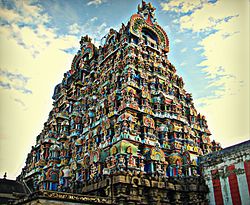
Nellaiappar Temple
One of the oldest cities in Tamil Nadu, sitting on the Thamirabarani river, taking its name from the Nellaiappar Temple.
- Nellaiappar Temple
- Courtallam Falls
- Manimuthar Falls
- Papanasam
Backdrop pattern: Tamil kolam

Patna, Bihar
Thekua

Golghar
Known in antiquity as Pataliputra, Patna was the capital of the Mauryan and Gupta empires, one of the largest cities in the ancient world under Chandragupta Maurya.
- Golghar
- Patna Sahib Gurudwara
- Buddha Smriti Park
- Bihar Museum
Backdrop pattern: Madhubani / Mithila painting

Pune, Maharashtra
Modak

Shaniwar Wada
Rose to prominence as the seat of the Peshwas, prime ministers of the Maratha Empire, in the 18th century. Shaniwar Wada was their fortified residence.
- Shaniwar Wada
- Aga Khan Palace
- Sinhagad Fort
- Osho Ashram
Backdrop pattern: Warli tribal art, Maharashtra

Raipur, Chhattisgarh
Khurmi
.jpg/250px-Mahant_Ghasidas_Sangrahalaya_Raipur_(5).jpg)
Mahant Ghasidas Memorial Museum
Founded by Brahma Deo Rai of the Kalachuri dynasty, which ruled the region historically known as Dakshina Kosala. Raipur became the capital of Chhattisgarh when the state was carved out of Madhya Pradesh on November 1, 2000.
- Mahant Ghasidas Memorial Museum
- Swami Vivekananda Sarovar (Budha Talab)
- Purkhouti Muktangan, Naya Raipur
Backdrop pattern: Bastar tribal art, Chhattisgarh

Surat, Gujarat
Ghari

Surat Fort
One of the busiest ports on the Indian Ocean trade route through the Mughal era, Surat became the site of the British East India Company's first Indian trading factory in 1608. It later grew into a major center for textiles and diamond polishing, earning it the names "Silk City" and "Diamond City."
- Surat Fort (Old Fort)
- Dutch Garden
- Sardar Vallabhbhai Patel Museum
Backdrop pattern: Surati zari metallic thread work

Kozhikode, Kerala
Kozhikodan Halwa

Kappad Beach
Kozhikode (Calicut) was the seat of the powerful Zamorin dynasty and a key node in the Indian Ocean spice trade for centuries. In 1498, Vasco da Gama landed at nearby Kappad beach, opening the first direct sea route between Europe and India.
- Kappad Beach
- Kozhikode Beach
- Beypore (traditional Uru boat-building port)
Backdrop pattern: Kerala mural painting

Puri, Odisha
Khaja

Jagannath Temple
Puri is one of Hinduism's Char Dham pilgrimage sites, home to the Jagannath Temple built in the 12th century under the Eastern Ganga dynasty. It hosts the annual Rath Yatra chariot festival, one of the largest religious processions in the world.
- Jagannath Temple
- Puri Beach
- Konark Sun Temple (nearby)
Backdrop pattern: Odisha pattachitra

Almora, Uttarakhand
Bal Mithai

Kasar Devi Temple
Founded in 1568 by Kalyan Chand of the Chand dynasty, Almora was the seat of the Kumaon kingdom into the late 18th century, later held by Gorkha forces until the British took it in the 1814 Anglo-Gorkha War. Set on a Himalayan ridge, it remains the cultural capital of Kumaon.
- Kasar Devi Temple
- Bright End Corner
- Binsar Wildlife Sanctuary
Backdrop pattern: Kumaoni aipan floor art
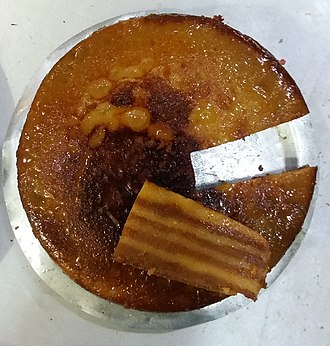
Panaji, Goa
Bebinca

Basilica of Bom Jesus
Panaji appears in an 1059 CE Kadamba-dynasty copper plate; its fort was stormed by the Portuguese in 1510. After an epidemic devastated Old Goa, the Portuguese rebuilt around Panaji as the new capital of Portuguese India in the 18th century, and it has been Goa's state capital since 1987.
- Basilica of Bom Jesus (Old Goa)
- Fort Aguada
- Miramar Beach
Backdrop pattern: Indo-Portuguese tilework, Goa

Srinagar, Jammu & Kashmir
Firni

Dal Lake
Present-day Srinagar traces to Parvarapura, founded in the 6th century by King Pravarasena II at the base of Hari Parbat. Sultanate rulers built the Jamia Masjid in 1402, and Mughal emperors later laid out the Shalimar and Nishat gardens along the lake.
- Dal Lake
- Shalimar Bagh
- Shankaracharya Temple
Backdrop pattern: Kashmiri paisley (boteh)

Puducherry
Crème Brûlée

Matrimandir, Auroville
Ruled by the Pallavas, Cholas, and Pandyas before French trader François Martin founded a settlement in 1674, Puducherry stayed France's chief Indian colony until administration passed to India in 1954. Poet-freedom fighter Subramania Bharati lived here in exile from 1908 to 1918.
- Auroville (Matrimandir)
- Sri Aurobindo Ashram
- Promenade Beach / French Quarter
Backdrop pattern: Puducherry French Quarter ironwork

Imphal, Manipur
Chak-hao Kheer

Kangla Fort
Imphal was the seat of the Meitei Ningthouja dynasty kings for centuries, centered on Kangla Fort, until the British took control after the 1891 Anglo-Manipur War. In 1944 it was the site of the Battle of Imphal, where Allied forces halted Japan's attempted invasion of India.
- Kangla Fort
- Loktak Lake
- Ima Keithel (the all-women's market)
Backdrop pattern: Manipuri phanek weave

Guwahati, Assam
Til Pitha

Kamakhya Temple
Guwahati, on the banks of the Brahmaputra, was known in antiquity as Pragjyotishpura and served as capital of the ancient Kamarupa kingdom. It is today Assam's largest city and the gateway to Northeast India, home to the Kamakhya Temple, one of the subcontinent's oldest Shakti Peetha shrines.
- Kamakhya Temple
- Umananda Island
- Assam State Museum
Backdrop pattern: Assamese gamosa weave

Tirupati, Andhra Pradesh
Tirupati Laddu

Tirumala Venkateswara Temple
Tirupati grew around the Tirumala Venkateswara Temple, one of the world's most-visited religious sites, with inscriptions and endowments dating to the Pallava, Chola, and Vijayanagara periods.
- Tirumala Venkateswara Temple
- Sri Venkateswara Zoological Park
- Kapila Theertham
Backdrop pattern: Srikalahasti kalamkari

Gwalior, Madhya Pradesh
Gajak

Gwalior Fort
Gwalior grew around its hilltop fort, ruled successively by the Tomars, Mughals, and the Maratha Scindia dynasty. It is the seat of the Gwalior Gharana of Hindustani classical music and home to Tansen's tomb; UNESCO named it a "City of Music" in 2023.
- Gwalior Fort (Man Singh Palace)
- Jai Vilas Palace
- Tansen's Tomb
Backdrop pattern: Gwalior Fort stone lattice

Ranchi, Jharkhand
Tilkut

Jagannath Temple, Ranchi
Ranchi grew into a colonial administrative hub after the South-West Frontier Agency set up headquarters here in 1833, and later served as Bihar's summer capital. It became Jharkhand's capital when the state was carved out on November 15, 2000, and is nicknamed the "City of Waterfalls" for cascades like Hundru Falls on its outskirts.
- Jagannath Temple
- Rock Garden (Kanke Dam)
- Hundru Falls
Backdrop pattern: Sohrai-Khovar wall art, Jharkhand

Kurukshetra, Haryana
Panjiri

Brahma Sarovar
Kurukshetra, also called Dharmakshetra, is named after King Kuru and revered as the battlefield of the Mahabharata war, where Krishna delivered the Bhagavad Gita to Arjuna at Jyotisar. It remains a major pilgrimage site anchored by Brahma Sarovar, one of Asia's largest man-made sacred ponds.
- Brahma Sarovar
- Jyotisar
- Sthaneshwar Mahadev Temple
Backdrop pattern: Jyotisar's Gita chariot wheel

Kullu, Himachal Pradesh
Bobaru

Raghunath Temple
The Kullu valley appears in the Ramayana, Mahabharata, and Puranas, and the Chinese monk Xuanzang described it around 634-635 CE as a fertile valley ringed by mountains and monasteries. In 1650, the idol of Raghunath was brought from Ayodhya and enshrined here, and it still anchors Kullu's famous Dussehra festival today.
- Raghunath Temple
- Naggar
- Bijli Mahadev Temple
Backdrop pattern: Kullu shawl weave

Anantnag, Jammu & Kashmir
Shufta

Martand Sun Temple
An 8th-century sun temple built under the Karkota king Lalitaditya Muktapida and later destroyed by Sultan Sikandar Shah Miri, its ruins near Anantnag became the stage for Haider's "Bismil," filmed among the same stones. The town's own name traces to a spring described in the ancient Nilamata Purana.
- Martand Sun Temple
- Achabal Gardens
- Kokernag
- Verinag
Backdrop pattern: Kani shawl weaving, Kashmir

Mumbai, Maharashtra
Mawa Cake
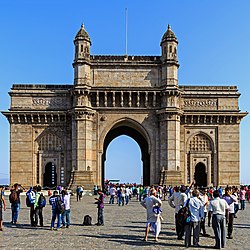
Gateway of India
Built to commemorate King George V's 1911 landing and completed in 1924, the Gateway of India stands where seven fishing islets were reclaimed into one city after the British took control in 1661. Mumbai grew into one of the Arabian Sea's largest ports once the Suez Canal opened in 1869.
- Gateway of India
- Chhatrapati Shivaji Maharaj Vastu Sangrahalaya
- Elephanta Caves
- Kala Ghoda
Backdrop pattern: Parsi Gara embroidery

Mainpuri, Uttar Pradesh
Sohan Papdi

Pundri Fort ruins
Mainpuri sits in the ancient Dakshina Panchala region and the Braj cultural belt associated with Krishna, later held by Chauhan Rajputs who fled Delhi after 1192. It became a center of revolutionary activity in 1918, when Ram Prasad Bismil organized the Mainpuri Conspiracy and printed his pamphlet-poem "Mainpuri Ki Pratigya."
- Sheetla Devi Temple
- Bhimsen Mandir
- Saman Bird Sanctuary
- Pundri Fort ruins
Backdrop pattern: Mainpuri Tarkashi wire inlay


.JPG/330px-Gajjar_ka_halwa_(carrot_halwa).JPG)


.jpg/330px-Sooji_Halwa_(Rava_Sheera).jpg)